
Introduction
Vitamin D deficiency in children is more common than many parents realize. While some signs are easy to spot, others are often missed. Early detection is important because vitamin D helps children grow strong bones and supports their immune system. In this blog, we will explain why vitamin D matters, the signs of deficiency, and how parents can help their kids stay healthy.
What Is Vitamin D and Why Is It Important for Children?
Vitamin D is a nutrient that helps the body absorb calcium. Because of this, it is vital for building strong bones and teeth. Children’s vitamin D needs are higher during growth spurts. Besides bone health, vitamin D also helps the immune system fight infections. Without enough vitamin D, kids may not grow as they should. In some cases, they may even develop bone problems like rickets.
Common and Overlooked Signs of Vitamin D Deficiency in Children
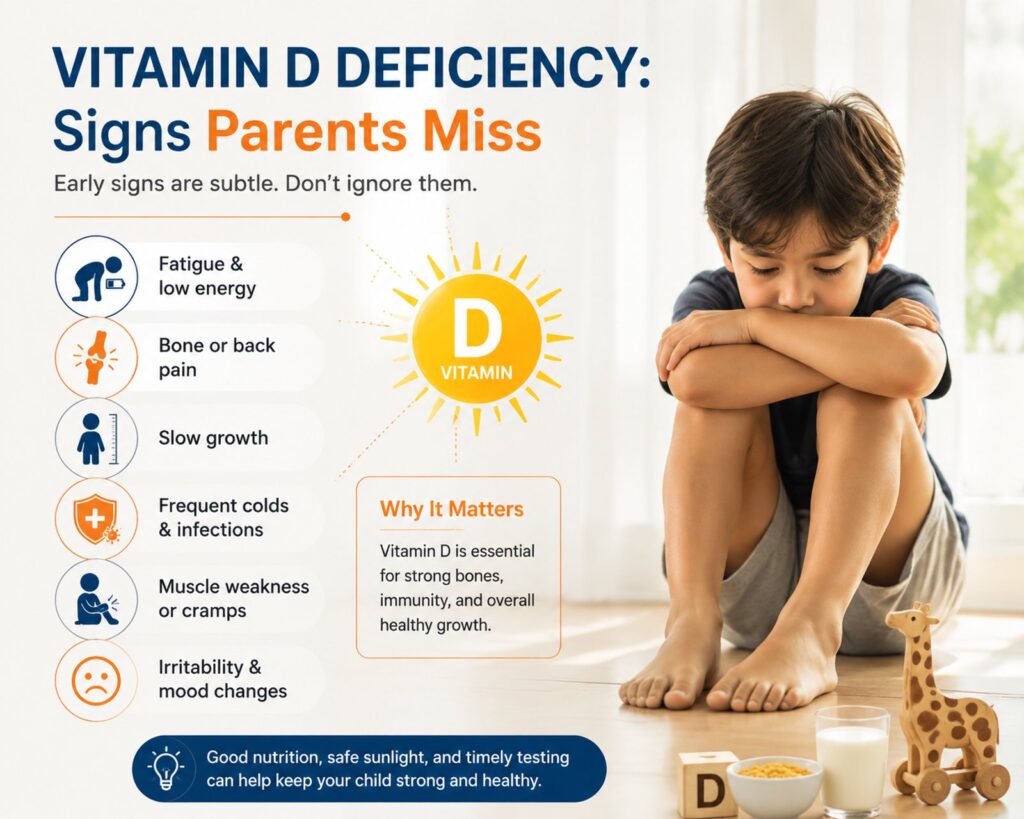
Many parents know that weak bones can be a sign of vitamin D deficiency in kids. However, other signs are easy to miss. For example, children may complain of muscle aches or feel tired all the time. Sometimes, they may get sick more often than usual. In some cases, children may have delayed growth or dental problems. Here are some signs parents should watch for:
Because these signs can be subtle, they are often overlooked. Yet, noticing them early can help prevent long-term problems.
Causes and Risk Factors
There are several reasons why children may develop vitamin D deficiency. For instance, kids who spend little time outdoors may not get enough sunlight. Sunlight helps the body make vitamin D naturally. In addition, children with darker skin need more sunlight to produce the same amount of vitamin D. Some kids may also have diets low in vitamin D-rich foods. Other risk factors include:
Because these factors can add up, it is important for parents to know their child’s risk.
How Vitamin D Deficiency Is Diagnosed
If you suspect your child has signs of vitamin D deficiency, a doctor can help. Usually, a blood test measures the level of vitamin D in the body. The doctor may also ask about your child’s diet, sun exposure, and health history. In some cases, X-rays may be used to check for bone changes. Early diagnosis helps prevent serious health issues.
Treatment Options and Dietary Sources
Treating vitamin D deficiency in children often starts with supplements. The doctor will recommend the right dose based on your child’s age and needs. In addition, eating foods rich in vitamin D can help. Some good sources include:
However, it is important not to give high doses without a doctor’s advice. Too much vitamin D can also be harmful.
Prevention Tips for Parents
There are simple ways to help prevent vitamin D deficiency in children. For example, encourage your child to play outside for 15–30 minutes a day. However, always use sun safety tips to avoid sunburn. Also, include vitamin D-rich foods in your child’s meals. If your child is breastfed, ask your doctor about vitamin D drops. Some children may need supplements, especially in winter or if they have risk factors. Here are some tips:
Because prevention is easier than treatment, these steps can make a big difference.
Conclusion
Vitamin D deficiency in children can cause many health problems, but it is often missed. By knowing the signs and taking simple steps, parents can help their kids grow strong and healthy. If you notice any signs of vitamin D deficiency in your child, consult Dr Harish NV for personalized advice.