What Is Childhood Scoliosis?
Childhood scoliosis is a condition where a child’s spine curves sideways. Usually, the spine should be straight when viewed from behind. However, in scoliosis, it may look like an “S” or “C” shape. Early detection is important because, with time, the curve can get worse. Most cases appear in children between ages 10 and 15, but it can start earlier. According to the CDC, early treatment can help prevent problems later in life.
The Importance of Good Posture in Children
Good posture helps children grow strong and healthy. It keeps their bones and muscles in the right position. As a result, children with good posture often have fewer aches and pains. In addition, proper posture helps with breathing and balance. Encouraging good habits early can prevent spinal problems in children.
Early Signs and Symptoms of Scoliosis and Poor Posture
Spotting signs of scoliosis in children early can make a big difference. Look for these signs at home or school:
Besides scoliosis, poor posture can show up as slouching, rounded shoulders, or a forward head. Sometimes, children may complain of back pain or tiredness after sitting.
Common Causes and Risk Factors
There are several reasons why scoliosis or poor posture may develop in children. Some common causes and risk factors include:
Although most cases of childhood scoliosis have no known cause, keeping an eye on risk factors can help with early detection.
How Scoliosis Is Diagnosed in Children
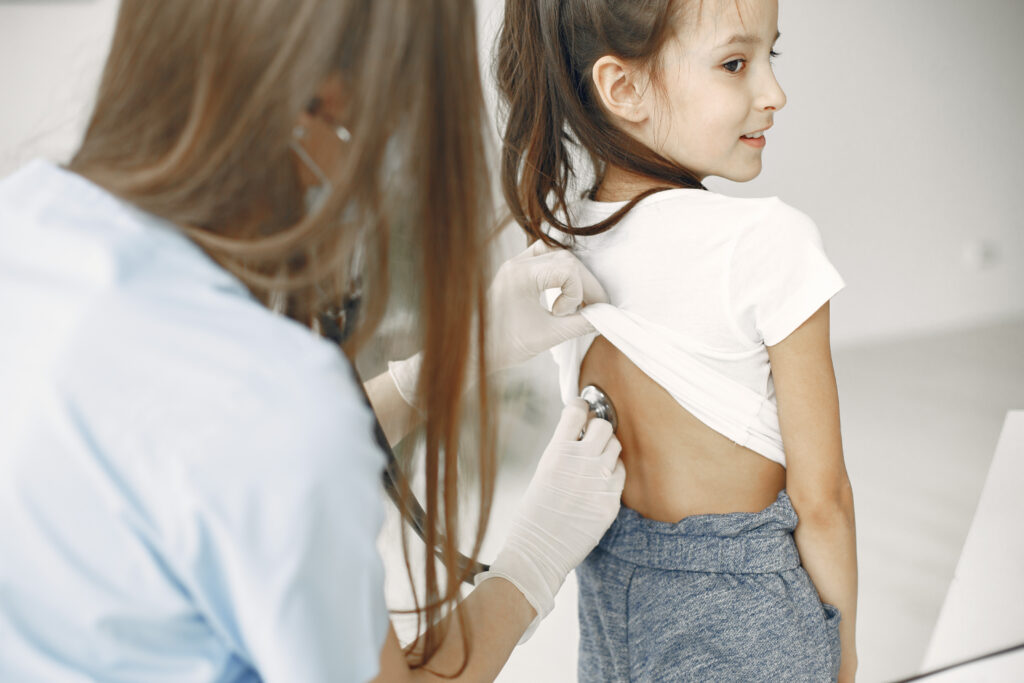
Doctors use several steps to diagnose childhood scoliosis. First, they will ask about your child’s health and family history. Next, they will examine your child’s back and posture. Often, doctors ask children to bend forward so they can check for unevenness. If they suspect scoliosis, they may order an X-ray. This helps show the curve of the spine. Sometimes, other tests are needed to rule out other causes.
Treatment Options and Management Strategies
Treatment for childhood scoliosis depends on the curve’s size and the child’s age. For mild curves, doctors may only watch and check the spine every few months. However, if the curve is getting worse, a back brace may be needed. Braces do not straighten the spine, but they can stop the curve from growing. In rare cases, surgery may be needed for severe curves. Physical therapy and exercises can also help strengthen the back and improve posture.
Tips for Promoting Healthy Posture at Home and School
Parents and teachers can help children develop good posture. Here are some simple tips:
With these habits, children can reduce the risk of spinal problems.
Prevention Strategies and When to Seek Medical Advice
While not all cases of childhood scoliosis can be prevented, early action helps. For example, regular check-ups with your child’s doctor can catch problems early. Encourage your child to stay active and practice good posture. If you notice any signs of scoliosis or posture issues, do not wait. Early treatment can prevent the curve from getting worse.
Conclusion: Take Action for Your Child’s Spine Health
In summary, childhood scoliosis and poor posture can affect your child’s health and comfort. Early signs may be easy to miss, but regular checks and good habits can help. If you notice any changes in your child’s posture or back, consult Dr Harish NV for advice. Early help can make a big difference in your child’s future health.